The theory behind the review:
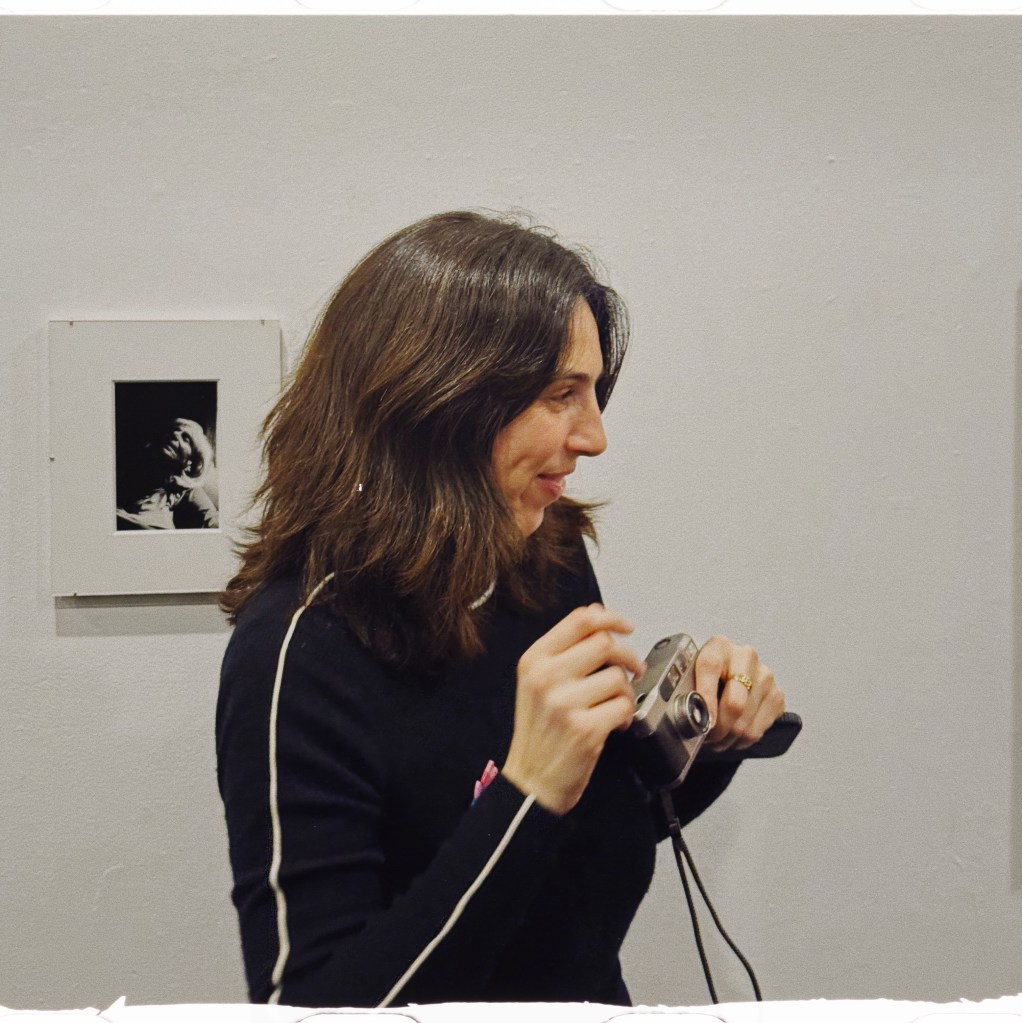
“Thus the air is the luminous shadow which accompanies the body; and if the photograph fails to show this air, then the body moves without a shadow, and once this shadow is severed, as in the myth of the Woman without a Shadow, there remains no more than a sterile body. It is by this tenuous umbilical cord that the photographer gives light; if he cannot, either by lack of talent or bad luck, supply the transparent soul its bright shadow, the subject dies forever.”
—Roland Barthes, Camera Lucida
Photography is a provocative medium, desire is a vulnerable position, and to be looked at is not necessarily to be seen. Making a picture: What does it take?
I’ve read Roland Barthes’ Camera Lucida at least once a year since I first read it five years ago and it’s never been the same. This is the first time I feel a sentiment of disagreement. Barthes says that, “photography transformed subject into object [(‘myself’ never coincides with my image…’myself’ doesn’t hold still, giggling in my jar)],” and quotes Sartre on the photographed persons being persons only because of their resemblance to a human being, “‘drift[ing] between the shores of perception, between sign and image, without ever approaching either.’” Barthes claims photography to be a superimposition of reality and the past: “I can never deny that the thing has been here.”
This is true. Yes it has been, but exactly because it has that it will be. The death in the image dies so it may be reborn. The image and the being are therefore separate entities. The subject is living so long as it is looked at, the way a person only dies when we cease saying their name. “The photograph is literally the emanation of the referent,” says Barthes, so every time we look at one, its existence is enlivened again, like pressing play.
Sontag, too, coldly says that “to photograph people is to violate them, by seeing them as they never see themselves, by having knowledge of them that they can never have; it turns people into objects that can be symbolically possessed, just as a camera is a sublimation of the gun, to photograph someone is a subliminal murder—a soft murder, appropriate to a sad frightened time.”
This is often the case but it does not have to be.
Mark Sealy, in his 2019 book, Decolonizing the Camera, establishes that “…the history of photography can only be complete if the voice of the subaltern is made critically present within it…that can help us re-read the past and reconfigure different meanings concerning history, race, rights, and human recognition in the present.” History happens in stories—narratives—so rereading is also rewriting. There is another way to see (there must be), and I want to propose instead of a death, a birth.
Decolonizing the camera: I wonder if instead of a will to power, we can propose a will to intimacy. If it is the moment of recognition beyond the lens which incites the capture, a looking and a looking back, a seeing must ensue. The subject may remain the subject and refrain from calcifying into an object so long as we can sustain its gaze. It’s just like holding a hand. The intimacy was there, and it can be again, symbolically, in the experience of it anew and differently, with other bodies of flesh and blood passing by one another. Their registering of each other brings their being into another register of the real, as we connect and are able to recognize the human behind the image, in our own eyes.
The umbilical may be cut, but another tether may be woven. If the object is a subject, may they not experience pleasure too? Can both identities exist at the same time? Two sides of a coin is just a coin, just as a bird cannot fly without two wings.
I guess what I’m asking is if a woman is still an object under the gaze of Woman instead of Man, in the encapsulating senses of these terms, the Woman then being whole, uncastrated, or better yet, filled back in. What if instead of phallus being a will to power, it can be a will to intimacy? There is an obsession with lack in cultural and psychoanalytic discourse. I don’t understand the focus on loss, when there is so much to experience, so much to gain.
The body is not passive. Can we love someone as they are? Why must desire be bound up with shame? We can have our cake and eat it for as long as we like.
To return to what could be a point of departure: Does desire have to be suffering? Or is there another way to see it?
Works Consulted over time and revisited in this one:
Seeing Desire: Group Exhibition
Elinor Carucci, Maria Catalan, Marisa Chafetz, Hannah Edelman, Ashley McLean, Martha Naranjo Sandoval, Sophie Joseph Schwartz, and Ana Vallejo. A Counter Collective Exhibition, curated by Victoria Campa
Mark Sealy, Decolonizing the Camera, 2019
Roland Barthes, Camera Lucida, 1980
Émilie Blanc, Devenir une artiste, 2026
Walter Benjamin, The Work of Art in the Age of Mechanical Reproduction,
Laura Mulvey, Visual Pleasure and Narrative Cinema, 1975
Psychoanalysts Jamieson Webster and Adam Phillips on How to Get the Life You Want, Cultured Magazine, 2026
Gideon Jacobs, Images and Trump l’Oeil, LA Review of Books, 2025
Susan Sontag, On Photography, 1977
 ByMadelynGrace
Leave a comment